How Iron Becomes Energy
How Iron
Becomes Energy
Understanding how metal turns into power — and back again.
Why Iron Is a Superior Clean Fuel
High Energy Density & Powerful Heat
Iron powder has high energy density and burns up to 1,800°C, providing powerful heat while allowing compact storage and transport.
Carbon-Free Combustion
Burning iron produces only iron oxide — no carbon emissions.
No SOx / Ultra-Low NOx
No SOx and extremely low NOx emissions, minimizing air pollution.
Safe, Non-Toxic, and Easy to Handle
Safe, Non-Toxic,
and Easy to Handle
A non-volatile, non-toxic solid fuel — low explosion risk like hydrogen, no toxicity like ammonia. Stable at room temperature and pressure.
Recyclable & Resource-Rich
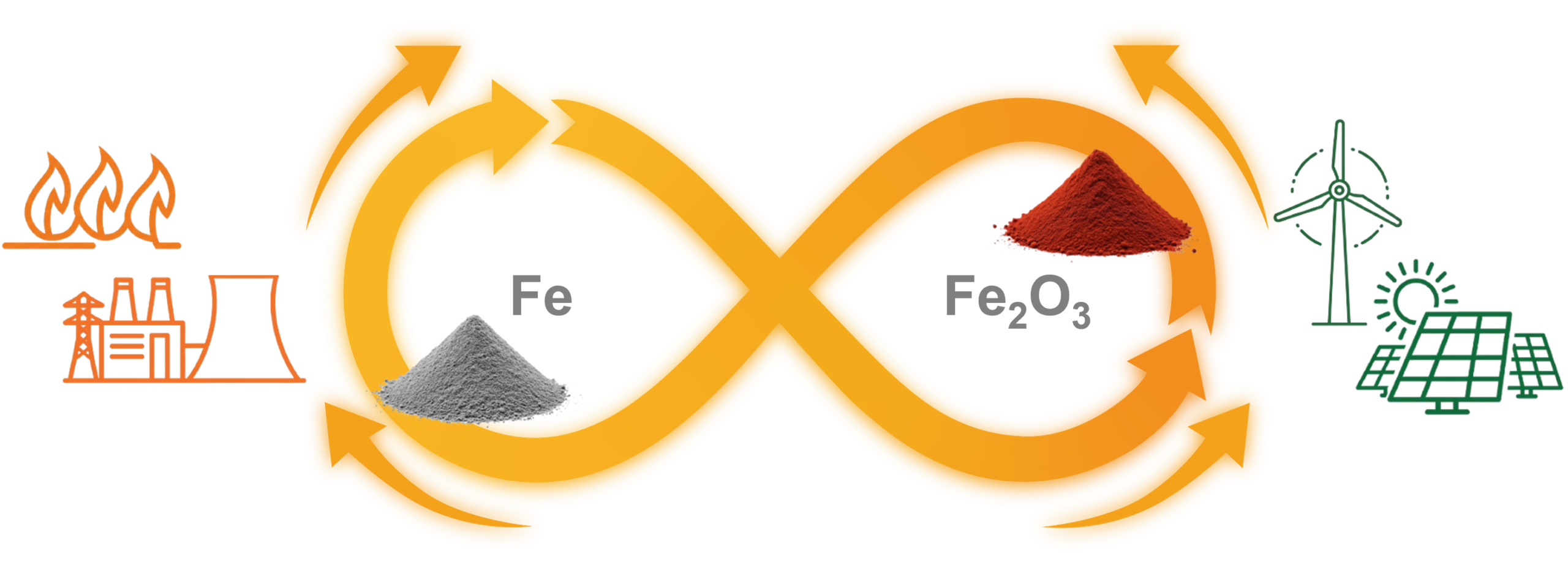
Oxidized iron can be reduced back to fuel, or reused as raw material — combining recyclability with resource value.
Abundant & Accessible Worldwide
Iron is one of the Earth’s most abundant elements, ensuring global availability and stability.
How It Works as a Fuel
How It Works
as a Fuel
Iron burns.
When iron powder meets oxygen, it releases intense heat.
It’s fuel.
By controlling iron powder combustion, we can generate stable, high-temperature heat — safely, cleanly, and continuously.
It’s recyclable.
Energy that never ends — only transforms.
Iron enables a truly sustainable energy loop: burn, recover, and reuse.
①Combustion → ②Collection → ③Regeneration → ④Reuse
Bring Iron Fuel into the Field.
Bring Iron Fuel
into the Field.
We’re looking for partners and pilot sites to turn our technology into real-world systems.